
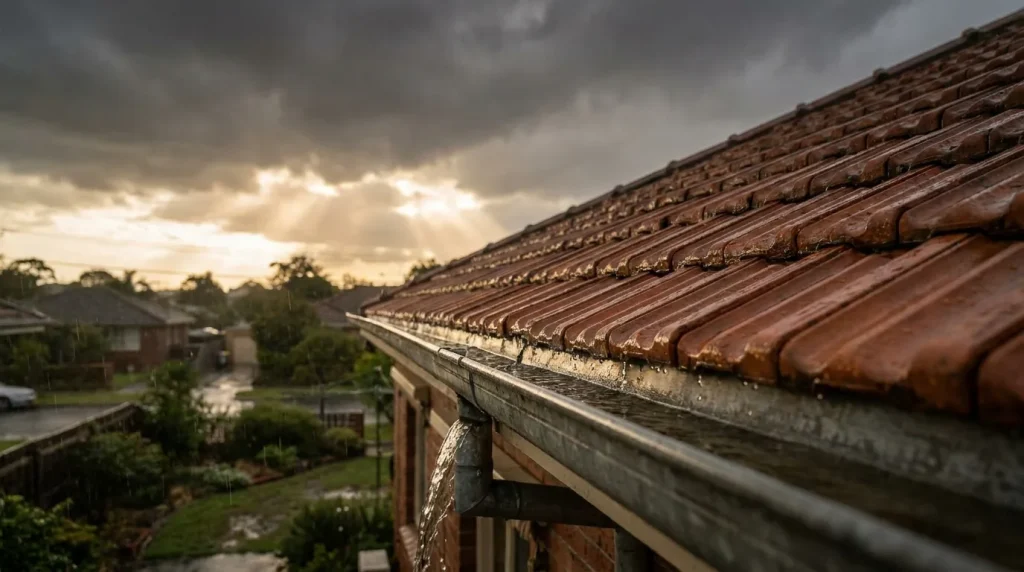
To prepare your roof for storms, clear your gutters and downpipes, check for cracked or lifted tiles, inspect your flashings and valleys, look inside the roof cavity for existing leaks, and secure loose outdoor items. In Melbourne, the best time to do this is late winter, before the spring storm season arrives.
Below is the full checklist our roof plumbers work through, why each step matters, and the warning signs that mean it is time to call a professional. As a family owned Melbourne plumbing and roofing business with more than 20 years on local roofs, we have seen what a single blocked gutter can do to a home during a heavy Melbourne downpour.
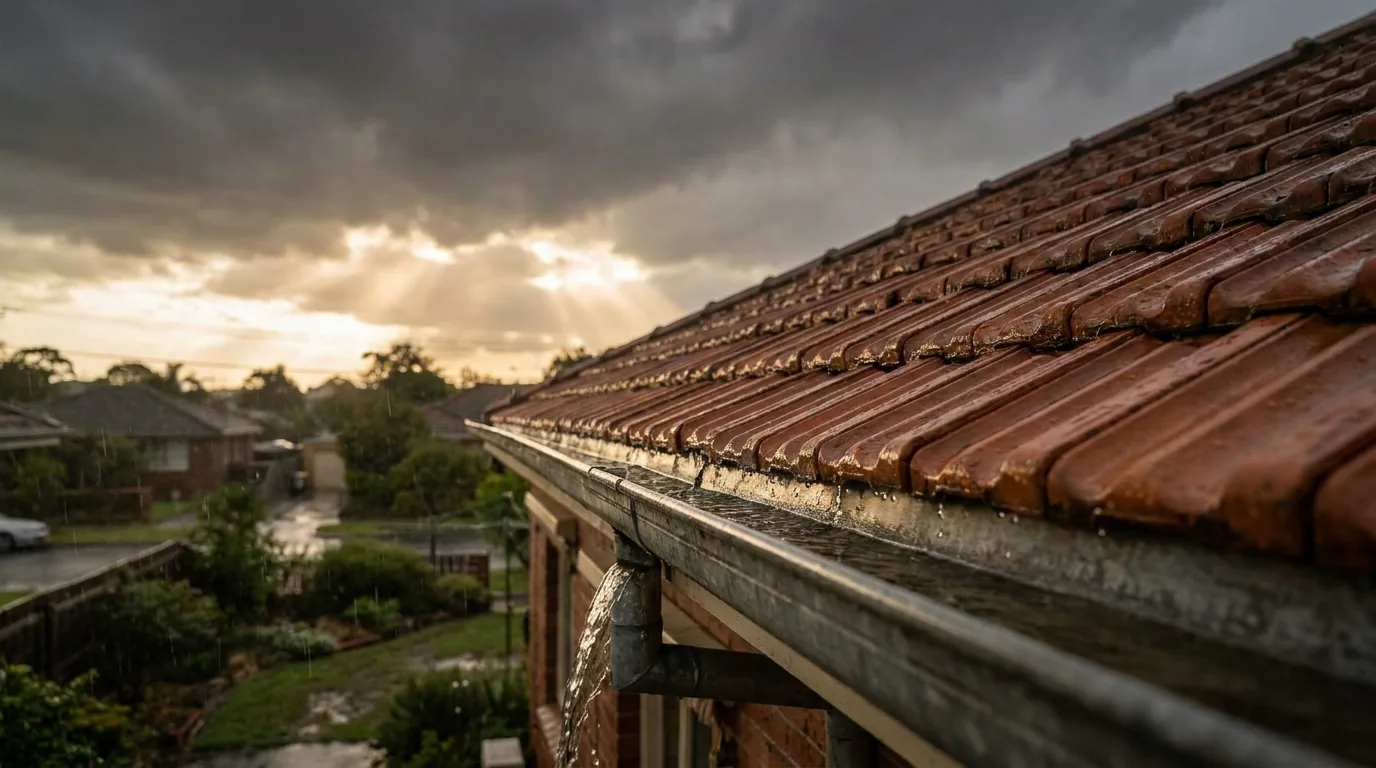
Why prepare your roof before Melbourne’s storm season?
Severe thunderstorms across southern Australia, including Melbourne, are most likely in spring and summer. The Bureau of Meteorology classes a thunderstorm as severe when it brings large hail, damaging winds, or heavy rain that can cause flash flooding. Any of those can find the weak point in a roof in minutes.
A roof that copes fine in calm weather can fail fast when it is hit with wind driven rain and hail. Blocked gutters overflow back into the eaves. A lifted tile becomes a hole. A rusted valley lets water straight into the ceiling. The cheapest time to deal with any of this is before the storm, not during it.
We see the pattern every year across the eastern suburbs, from Croydon South and Ringwood to Bayswater and Box Hill. The first big spring storm rolls through, and the calls come in from homes whose gutters were packed with leaves. The fix before the storm is ten minutes with a scoop. The fix afterwards is a plumber, a plasterer and a painter.

Your pre-storm roof and gutter checklist
Work through these ten checks before the season turns. Do the ground level checks yourself, and leave anything that means getting onto the roof to a licensed roof plumber.
- Clear your gutters and downpipes. Leaves, twigs and sludge stop water draining away. When gutters overflow, water runs back under the roof edge and into the eaves and wall cavity. Scoop out the debris, flush the gutter with a hose, and make sure the water runs freely toward the downpipe.
- Check your downpipes are flowing. A clean gutter is no use if the downpipe below it is blocked. Run water down each downpipe. If it backs up or trickles, there is a blockage that needs clearing before the next storm.
- Inspect your roof tiles or metal sheets. Look for cracked, chipped, lifted or slipped tiles, and for loose or lifted metal sheeting. Storm winds get under a lifted edge and peel it back further. Replace or refasten anything loose now, while the weather is calm.
- Check your flashings and valleys. Flashings seal the joins around chimneys, vents and where the roof meets a wall. Valleys carry a large volume of water where two roof planes meet. Rusted, cracked or lifted flashings and debris packed valleys are among the most common leak points we find on Melbourne roofs.
- Clear and check your box gutters. Box gutters, common on commercial buildings and some homes, sit within the roofline and overflow inside the building when they block. Clear them out, and check the joints and the overflow outlet are clear and sound.
- Check your ridge capping and pointing. The mortar along the ridge line cracks and crumbles with age. Loose ridge caps are a genuine hazard in high wind. Look for cracked pointing and caps that shift when gently pressed.
- Trim overhanging branches. A branch over the roof drops leaves straight into your gutters and can whip down onto tiles in strong wind. Cut branches back from the roofline before the storm season starts.
- Look inside your roof cavity. From the manhole, check the underside of the roof for daylight, water stains, damp timber or a musty smell. These are signs of an existing leak, and a storm will only make it worse.
- Secure or store loose outdoor items. Outdoor furniture, trampolines, bins and umbrellas can become projectiles in a storm and damage your roof and windows. Tie them down or bring them inside when a warning is issued.
- Book a professional pre-storm inspection. Some checks are neither safe nor practical from the ground. A licensed roof plumber can get up safely, spot the problems you cannot see, and fix them before the weather turns.
How often should each check be done?
| Check | How often | Best timing |
|---|---|---|
| Clear gutters and downpipes | Twice a year | Autumn and late winter |
| Inspect tiles, sheets and flashings | Once a year | Before spring storm season |
| Professional roof inspection | Every 1 to 2 years | Late winter |
| Check the roof cavity for leaks | After heavy storms | As needed |
How often should you clean your gutters in Melbourne?
For most Melbourne homes, clean your gutters at least twice a year: in autumn once the leaves have fallen, and again in late winter before storm season. If your home is surrounded by gum trees or paperbarks, you may need to clean them up to four times a year, because those species drop leaves and bark all year round. Established eastern suburbs like Croydon, Ringwood and Mooroolbark tend to need it more often for exactly this reason.
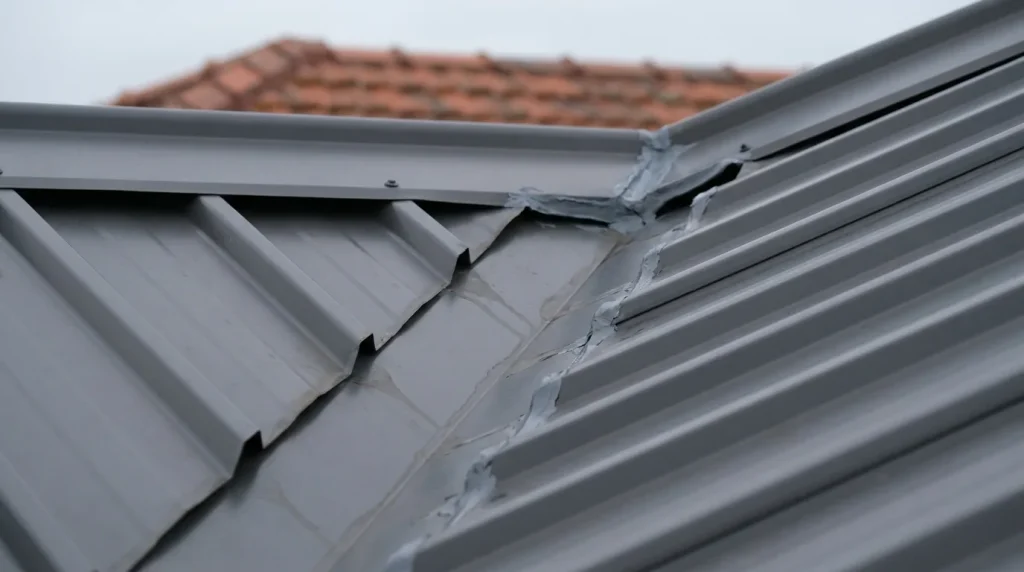
Signs your roof may not survive the next storm
Some problems are easy to spot from the ground once you know what to look for. Get any of these checked before the storm season, not after:
- Sagging, rusted or overflowing gutters
- Water stains on ceilings, cornices or under the eaves
- Cracked, lifted, slipped or missing tiles
- Rusted or lifting valleys and flashings
- A roof or ceiling that has leaked before
- Daylight visible in the roof cavity
A roof that already shows these signs in calm weather is the one most likely to leak in a storm.
When should you call a licensed roof plumber?
Call a licensed roof plumber if you are not comfortable working at height, if you have found a leak, or if your roof is more than 15 to 20 years old and has not been checked in a while.
At Eastside Plumbing Group we are licensed across gas, water and roof (licence number 107907), and our approach is simple: if there is a leak, we will find it, and we will fix it. We use thermal imaging and moisture reading to trace the source of a leak rather than just the symptom, and we provide a detailed, insurer ready report with the job. We are not the cheapest, but we get it right the first time so the fix lasts.
You can see the full scope of what we handle on our gutter and roofing services page. Every job is backed by our lifetime labour guarantee, and we hold a 4.8 star rating across more than 220 Google reviews from customers around Melbourne’s eastern suburbs. We are a family run team based in Croydon South, and we have been keeping local roofs watertight for more than 20 years.
Frequently Asked Questions
How do I prepare my roof for a storm?
Clear your gutters and downpipes, check for cracked or lifted tiles, inspect your flashings and valleys, look inside the roof cavity for existing leaks, and secure loose outdoor items. For anything you cannot safely reach or see from the ground, book a professional roof inspection before the storm season begins.
When is storm season in Melbourne?
Severe thunderstorms across southern Australia, including Melbourne, are most likely in spring and summer, roughly October through March. These storms can bring large hail, damaging winds and flash flooding. Late winter, just before spring arrives, is the ideal time to check and prepare your roof and gutters.
How often should I clean my gutters?
In most Melbourne homes, clean your gutters at least twice a year: in autumn after the leaves fall, and again in late winter before storm season. Homes surrounded by gum trees or paperbarks may need cleaning up to four times a year, as these species drop leaves and bark all year round.
Can I inspect my own roof, or should I hire a professional?
You can safely check your gutters, roof cavity and ground level signs yourself. Getting onto the roof is where most home injuries happen, so leave tile, flashing and valley inspections to a licensed roof plumber. They can safely spot and fix the problems you cannot see from the ground.
What should I do if my roof leaks during a storm?
Move valuables clear, place a bucket under the drip, and if it is safe, catch water in the roof cavity to limit ceiling damage. Do not go onto a wet roof. Call a licensed roof plumber as soon as possible for an emergency repair and a proper leak trace once conditions allow.
Get your roof storm ready
A short checklist now saves a wet ceiling later. Clear your gutters, check your tiles and flashings, and deal with any existing leak before Melbourne’s spring storms arrive. If you would rather have it checked properly, our team can inspect your roof and gutters and fix anything before the weather turns.
Call Eastside Plumbing Group on (03) 9728 6629 to book your pre-storm roof and gutter inspection.
